return
to Computers for Education home
|
||||||||||
CONTINUOUSLY UPDATED BLOGS, WIKIS, AND ARCHIVESCALL IS Virtual Software List / Diigo - social bookmarking group with resources for ESOL teachers and students. All are welcome to join the group and contribute good website links. Highlighter, sticky notes, tagging, group networking, and slideshow of tagged websites are available from Diigo. Computers for Education / Scoop It - occasional articles on pedagogy and technology for language learning (replaces my blog, Virtual=Real). EVO Video Archives - wiki for information on tools, resources, student projects, and activities of the annual EVO Video sessions (rich archive, occasional updates). Quicksteps -- Tools, resources, and tips on using technology. Check out the new page on Teaching Poetry Writing. References and Resources for Building Online Communities of Practice - references for the chapter "Communities of practice for pre-and in-service teacher education." 2006. In P. Hubbard & M. Levy, eds., Teacher Education in CALL, pp. 301-315. John Benjamins.My Twitter account - tools and resources for ESL/EFL, in brief: @ElizabethHS FREE MOOCS OFFERED BY THE UNIVERSITY OF OREGON- AEI, AND THE US DEPARTMENT OF STATEShaping the Way We Teach English, Course 1: The Landscape of English Language Teaching. Created with Deborah Healey, and Jeff Magoto. 2013-2015. https://www.coursera.org/course/shaping1landscape. Sign up with Coursera to receive notification when new sessions are open.Shaping the Way We Teach English, Course 2: Paths to Success in English Language Teaching. Created with Deborah Healey, and Jeff Magoto. 2013-2015. https://www.coursera.org/course/shaping2paths. Sign up with Coursera to receive notification when new sessions are open. Course
descriptions and presentations on the MOOC at TESOL
may be found at Computers
for Education PBWorks: UOAEI-DoS MOOC.
|
||||||||||
|

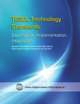 |
TESOL Technology
Standards.
2012. Alexandria, VA: TESOL. a collection
of vignettes, description of the TESOL
Standards, and research on SLA. Written
and edited by the TESOL Technology
Standards team. Summer 2011.The framework
is downloadable as a pdf
file. |
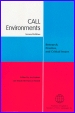 |
CALL Environments: Research, Practice, and Critical Issues, 2nd edition. 2007. Joy Egbert and Elizabeth Hanson-Smith, Editors Now newly updated, this classic for TESOL courses is packed with articles by new authors, and additional exercises and activities after each chapter. This volume demonstrates how a theoretical framework based on ESL and SLA research, as well as the new National Education Technology Standards, can be applied in typical CALL environments, whether for one computer or many. This second edition highlights new tools, discusses new research, and proposes new practical applications. Chapters cover topics in visual literacy, critical thinking, creativity, and extensive content- and project-based learning. Includes research and discussion activities for TESOL theory and practice, and an essential list of online resources. |
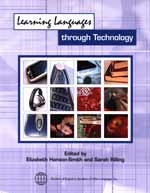 |
Learning Languages
through Technology. 2007. Elizabeth Hanson-Smith
and Sarah Rilling, Editors While posing important questions about how learning proceeds with new technologies, this volume demonstrates how teachers captivate the imagination of learners, from schoolchildren to postgraduates, by providing real-world purposes for language. The authors are from educational institutions in many regions of the world, and describe technology use from the lowest levels, such as word processing and scanning, to high-end multimedia and interactive communications through voice and video on the Internet. Forms a companion of case studies to CALL Environments. |
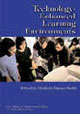 |
Technology-Enhanced Learning Environments. 2008. Elizabeth Hanson-Smith, Editor This volume presents case studies in which teachers have adapted and pioneered teaching innovations ranging from simple additions to traditional classroom teaching to radical alternatives that change the nature of language learning and teaching. Topics include: Building a Computer Learning Center; Organizing the Curriculum, Engaging Students, and Training Teachers. [No longer available from TESOL; a few may be found at Amazon.com.] |
|
For purchase information on
these books, go to
TESOL.org
> Publications
|
In progress
4th edition of Shaping the Way We Teach English MOOC
Pedagogical consultant for Live
Action English Interactive, Live Action Spanish,
and Live Action English: More!, with R.
Wachman, and L. Statan. Berkeley, CA: Command
Performance Language Institute. Available at http://www.cpli.net/list_computerMaterials.html.
Designer of Oxford Picture Dictionary Interactive, with E. Fella, N. Shapiro, and J. Adelson-Goldstein. New York: Oxford University Press. Available at http://www.esl.net/oxford_picture_dictionary_cdrom.html.